Web design for e-commerce
Give them a reasonto fill their basket.
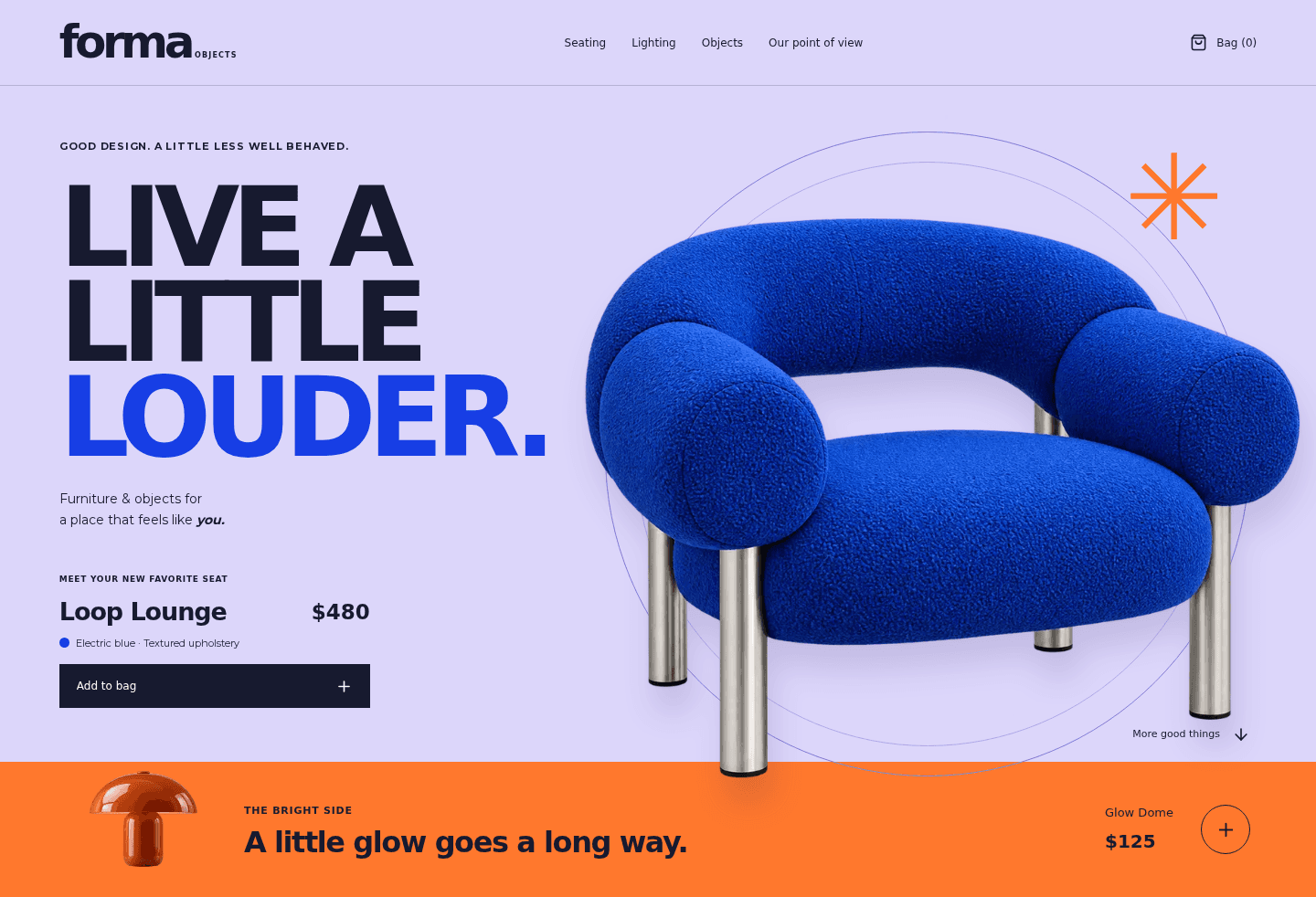
Website design for independent retailers in Arizona and across the US. Help customers compare products, understand their options, and place an order your team can fulfil.
Projects from $3,500
Make your collection easy to shop
Help shoppers find what they came for.
A striking storefront can still make shopping difficult when products are hard to compare, prices are hidden, or categories do not match the collection.
I give your products room to stand out with visible prices, useful categories, and sorting, so shoppers can move from a broad interest to a product they want.
Plan your online store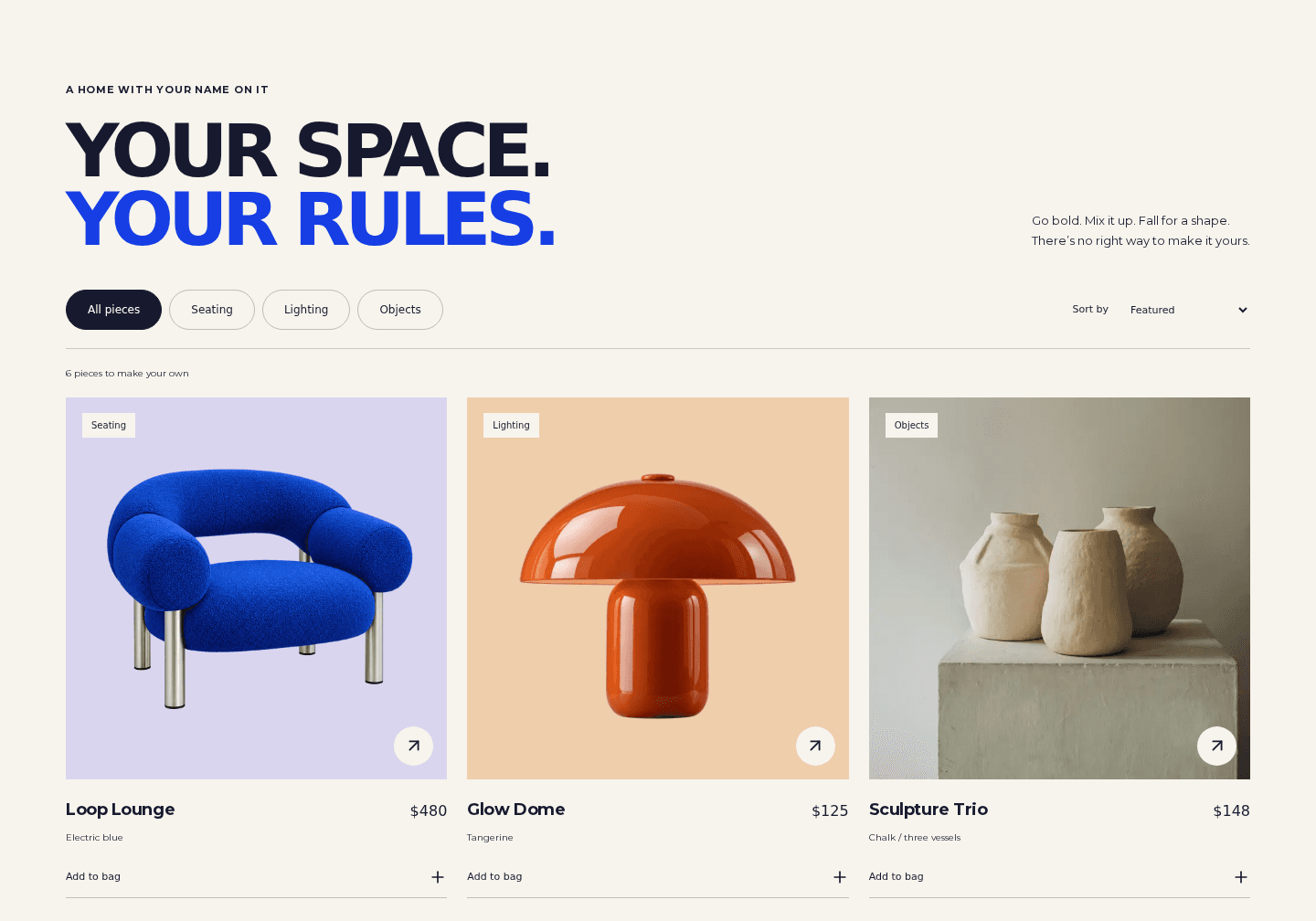
Make the final decision easier
Don’t let checkout undo the sale.
A cramped shopping bag makes it difficult to check quantities and costs, creating uncertainty just when a shopper is ready to move on to payment.
I make the bag easy to review and edit on a phone, with visible prices, a clear subtotal, and one prominent action leading into your checkout.
Improve your checkout experience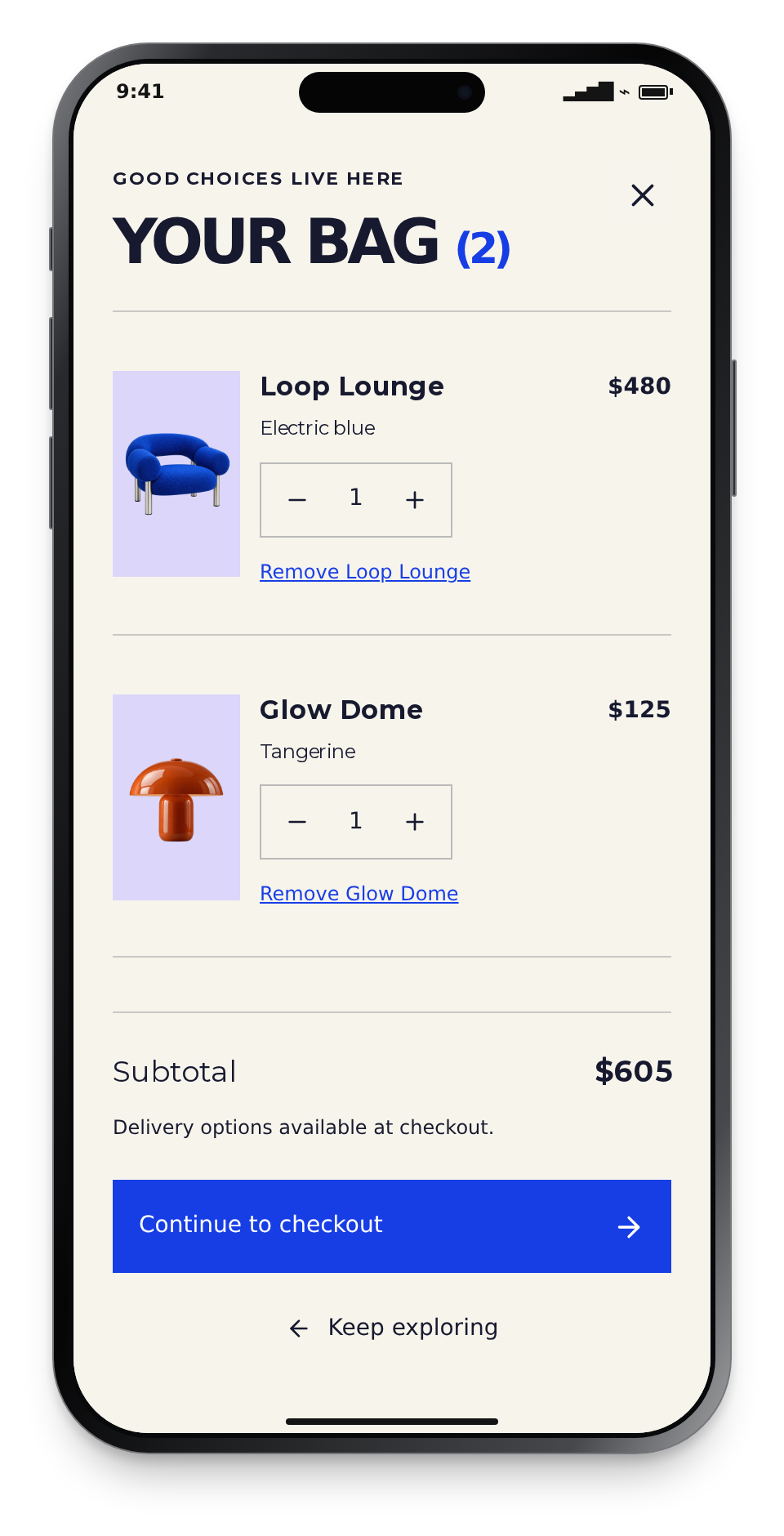
Answer the questions before adding to bag
Give shoppers enough detail to say yes.
A product image can catch someone’s attention without answering the practical questions that help them decide whether the item belongs in their home.
I pair generous product photography with useful descriptions, visible pricing, and simple quantity controls, keeping the buying action beside the information shoppers need to make their choice.
Build stronger product pages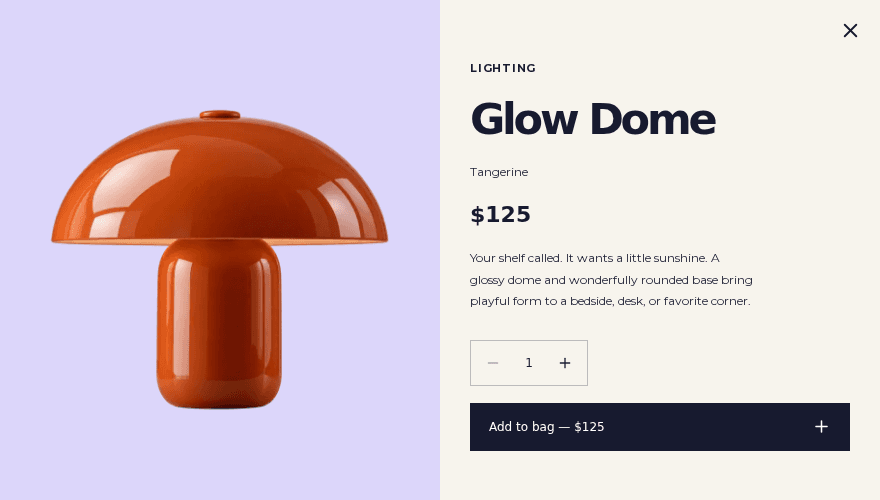
Selected projects
See it in the work.
Do you build Shopify stores for Arizona brands?
Yes. I scope ecommerce websites for independent retailers in Arizona and across the US. Shopify can be part of the plan; the linked Shopify service explains its build, redesign, and migration work.
Can you migrate an existing store to Shopify?
I can assess a move to Shopify after reviewing your products, data access, existing tools, and important URLs. Migration is a separate implementation scope; unchanged rankings or a complete transfer cannot be guaranteed.
How long does an ecommerce website take?
Most Shopify builds take 6–10 weeks depending on catalog size, custom features, and integrations.
Do you help with SEO and conversion after launch?
Yes. Ongoing SEO, maintenance, and improvement work can be scoped after launch. We agree on the work and available measurement first. Low traffic may not support reliable conversion experiments, and sales increases are not guaranteed.
What should I prepare for an ecommerce website quote?
Share your current site, a sample of the catalog, product options, delivery or collection needs, and the tools your staff use. Projects start at $3,500; the agreed scope determines the quote.
Can I keep the systems my shop already uses?
We assess your current stock, order, and payment tools before recommending changes. Connections depend on provider support, access, and plan limits. Subscription charges and custom integration work are identified separately.
Who updates products and handles orders after launch?
Your business remains responsible for product accuracy, availability, policies, and fulfilment. We agree on website editing, training, and any recurring content or maintenance work so responsibilities are clear.
What can we include in the project?
Your store needs to explain what you sell and make the next step clear. I plan ecommerce website design for small businesses in Arizona and across the US around your products, customers, and daily work.
We start with the buying experience: useful product information, clear delivery or collection choices, and an order path your team can support. Platform-specific development follows that brief.
- A catalog customers can understand. Group products around how people shop. Agree on useful categories, options, photos, and descriptions before filling pages with incomplete information.
- Product pages that answer buying questions. Make sizes, materials, compatibility, and included items clear where they matter. Use only specifications and claims your business can verify.
- A clear route from product to order. Plan the mobile path through options, cart, and checkout. Show the information customers need before they commit, including approved delivery and collection details.
- A store that fits your operations. Identify who maintains stock information, receives orders, and handles customer questions. Check the connections your existing tools support before promising a shared system.
- Checks before customers use it. Test representative products, variants, links, and the agreed order path. Confirm that order notifications reach the right team and content matches the business settings.
- Care after the first launch. Plan catalog updates, seasonal content, maintenance, and performance reviews. Use meaningful reporting to choose improvements; a new layout does not guarantee more sales.
Prepare the information behind each product
Start with a representative set of products, including items with options or special requirements. Gather approved photos, descriptions, prices, and availability rules. Decide who supplies missing details.
Keep one agreed source for product information. If stock is also sold in a physical shop, review how the online store will stay current before choosing an integration.
Make the order handoff part of the website brief
Decide what customers can buy online, where you deliver, and whether collection is available. Your team approves the policies and operating limits; the website makes those choices clear.
Walk through what happens after an order arrives. Confirm who receives it, what the customer is told, and how your team handles a question or change. Test that handoff before launch.
Choose the platform after the requirements are clear
Your catalog, existing tools, editing needs, and recurring costs shape the platform decision. A redesign can improve an existing store without moving it. A platform change needs a separate data and launch plan.
For Shopify-specific builds, themes, or migrations, explore the linked Shopify service below. This page focuses on the retail brief and customer journey; implementation is scoped around the platform you choose.

Your project. My full attention.
I’m Brandon. You’ll work directly with me, from the first conversation through design, development, and launch.